Sealcoating and crack filling that protects your pavement
Water is what wears out asphalt. It gets in through open cracks, softens the stone base underneath and, in a Kentucky winter, freezes and pushes the pavement apart. Sealcoating and crack filling are the two cheapest ways to slow that down, and they cost far less than the repairs they help you avoid.
Crack filling comes first. We clean out the cracks and fill them with a hot-applied, rubberized material that stays flexible as the pavement expands in summer and shrinks in winter. Filled cracks stop feeding water to the base, which is where potholes start.
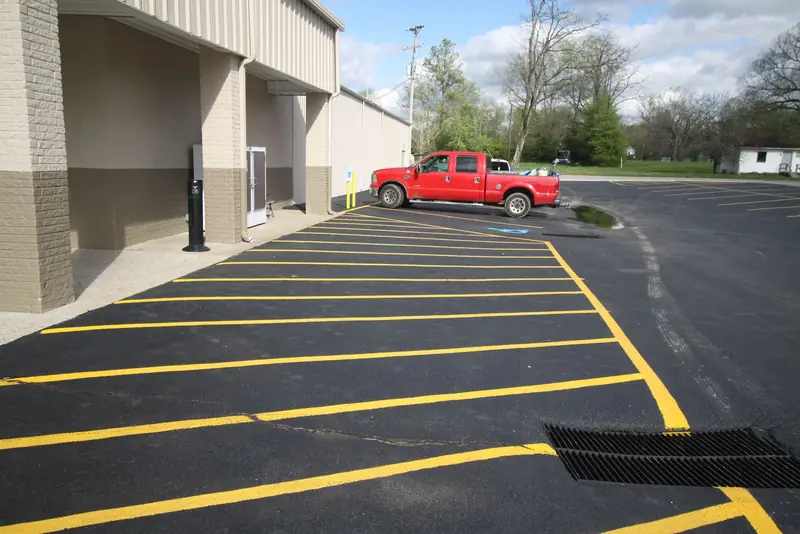
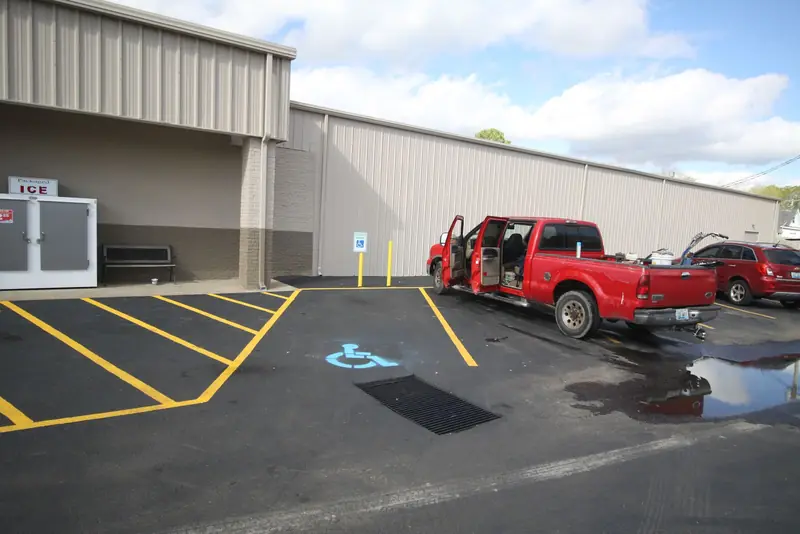
Sealcoat then goes over a clean, dry surface. It restores the dark finish, closes up the surface pores so water runs off instead of soaking in, and protects the binder from sun, oil and gasoline drips. Our current site notes that we use Brewer Cote sealer products. On commercial lots we plan the work in sections so the lot can stay partly open, and we restripe right after sealing so the lot is usable as soon as it cures.
Most lots benefit from sealcoating every two to four years, depending on traffic and sun exposure. Sealcoat is not a repair for failed pavement, so if we see broken or sunken areas we will recommend patching them first and tell you plainly when a lot is past the point where sealing is worth the money.
Frequently asked questions
- How long does sealcoat need to dry?
- Foot traffic is usually fine after several hours and vehicles the next day, but it depends on temperature, humidity and shade. We will tell you when to reopen each section.
- Can you sealcoat in cold weather?
- Sealcoat needs warm, dry conditions to cure, so we schedule it during the warmer months and watch the forecast closely. Crack filling has a wider season.
Sealcoating & Crack Filling photos