
Parking lot maintenance plan for Louisville property managers
A practical parking lot maintenance plan turns reactive pothole calls into a repeatable seasonal cycle: walk the lot, fix failed spots, seal cracks before winter, protect sound pavement with sealcoat and fresh striping, and plan ahead for resurfacing. Below you will find a copy-ready inspection log, a sample maintenance cycle and plain-language budgeting guidance built for commercial properties around Kentucky. American Paving, a division of American Group, LLC, offers free in-person lot walk-throughs and written estimates—call (502) 410-4080. Serving Louisville, Elizabethtown and surrounding counties.
What a maintenance plan is (and is not)
Property managers juggle dozens of building systems, and asphalt is easy to ignore until a pothole opens up or a tenant complains. A maintenance plan replaces fix-it-when-it-breaks spending with scheduled inspections and clear priorities so small cracks do not grow into base failures. Doing routine upkeep on time helps keep a sound lot from needing a full rebuild earlier than necessary.
At the same time, a maintenance plan is not a rigid calendar or a guarantee against weather and heavy traffic. Every lot ages differently depending on truck weight, drainage, sun exposure and past repairs. When American Paving walks a commercial lot, we check drainage, cracking patterns, soft or sunken spots, edges, curbs and striping, then describe the work in plain language—from the smallest repair that solves the problem up to resurfacing or full replacement when the base has failed. We follow the order that protects your spend: concrete and asphalt repairs first, then crack filling, then sealcoating, and line striping last so fresh lines are not covered or damaged.
Looking for a contractor for commercial paving? See American Group, LLC's Louisville commercial overview.
Step 1: Walk the lot and record its condition
Once or twice a year—ideally in the fall before freezing weather and again in the spring after thaw—walk the entire property on foot and write down what you see. Take photos of each defect with a rough location note, such as the main entrance throat, dumpster pad or north drive lane. Consistent photos and notes let you track whether a crack is spreading and make contractor bids much easier to compare side by side.
Use or copy the inspection log below for your property files:
| Area / feature | What to check | Photo ref | Priority | Target season |
|---|---|---|---|---|
| Cracks | Thin linear cracks vs. wide or branching alligator cracks; note length and whether edges are crumbling | Area + photo ID | High if wide or spreading; routine if narrow | Fall before freezing weather |
| Potholes / failed spots | Open holes, soft or sunken areas, and broken asphalt near entrances, drive lanes and dumpster pads | Area + rough size | Urgent (safety hazard and spreading base damage) | Spring or as soon as found |
| Ponding / drains | Standing water remaining hours after rainfall, clogged inlets and low spots across drive lanes | Photo after rain | High where water sits over cracks or heavy traffic | Address before patching or resurfacing |
| Striping / ADA stalls | Faded stall lines, worn directional arrows, crosswalks, fire lanes and hard-to-see ADA spaces | Area + stall count | Medium (higher for fire lanes and ADA stalls) | Warm weather, right after sealcoating |
| Curbs / ramps | Cracked, heaving or missing concrete curbs, broken pavement edges, uneven sidewalks and ADA ramps | Area + photo ID | High for trip hazards or water runoff under edges | Coordinate ahead of paving or sealing |
Step 2: Sort the work into repair, protect and replace
Once your walk-through log is complete, sort every line item into three buckets before requesting bids. Mixing them up—especially sealing over failed asphalt—wastes maintenance budget.
- Repair first: Potholes, sunken areas, crumbling edges and web-like alligator cracking mean the pavement or the stone base underneath has failed. A quick cold patch is only a temporary fix that often pops out within weeks. Lasting repair removes the damaged material with clean saw-cut edges, fixes the base where needed and compacts new asphalt into place.
- Protect sound pavement: Where the asphalt and base are still solid, focus on keeping water, sun and vehicle fluids out. Hot-applied rubberized crack filling seals open gaps so water cannot reach the base. Sealcoating then goes over a clean, dry surface to slow sun oxidation, block surface moisture and oil drips, and restore a uniform dark finish, followed by fresh striping once the sealer cures. Sealcoat cannot fill potholes, stop base failure or correct drainage low spots.
- Resurface or replace worn-out sections: If large areas are breaking up, water stands across the lot or older patches keep failing, ongoing patching costs more than a larger repair. When the base is still sound, an asphalt overlay adds a new surface layer; when the base has failed, full removal and rebuilding is the right call.
Related guides and services: parking lot repair, sealcoat or replace, what sealcoating can and can't fix, asphalt patching, sealcoating and crack filling, and commercial parking lots.
A sample seasonal and multi-year plan
Treat the table below as a working example rather than a fixed promise. Not every lot needs every step every year, and exact timing depends on pavement age, traffic weight, drainage, sun exposure and prior upkeep. An in-person inspection sets the real schedule for your property.
| Season / stage | Task | Why | Who does it |
|---|---|---|---|
| Yearly — Fall | Walk the lot; clean and fill open cracks in sound asphalt | Seals narrow cracks before winter water and de-icing salt freeze, expand and turn them into potholes. | Property manager (walk-through); paving crew (hot-applied rubberized crack filling) |
| Yearly — Spring | Inspect after freeze-thaw; patch potholes, failed base spots and broken edges | Catches winter damage early so traffic does not spread failures into surrounding sound asphalt. | Property manager (inspection log); paving crew (saw-cut patching and base repair) |
| Warm-weather cycle (often every 2 to 4 years, based on inspection) | Sweep and prep surface, treat oil spots, fill remaining cracks, sealcoat and restripe | Slows oxidation from sun and air, closes surface pores against water and oil, and restores clear stalls, arrows, fire lanes and ADA markings. | Paving crew (phased in sections so parts of the lot can stay open) |
| Later years (when large areas fail) | Evaluate mill and overlay vs. full replacement | Rebuilds worn pavement once widespread cracking, ponding or repeated patch failures make spot repairs uneconomical. | Paving contractor (in-person site evaluation and written scope) |
For commercial sealcoating, American Paving uses Brewer Cote sealer products, cleans and treats oil spots before application, plans work in sections so your property can stay partly open, and restripes right after the surface cures. Foot traffic is usually fine after several hours and vehicles the next day, depending on temperature, humidity and shade, and we tell you when to reopen each section.
Related guides: crack sealing before winter and mill and overlay vs full replacement.
Winter and the plan
Around Louisville and Elizabethtown, freeze-thaw cycles and road salt do the hardest damage to commercial lots. Water enters open cracks, freezes, expands and pries the asphalt apart. Traffic then breaks down the weakened edges while de-icing salt rides meltwater deeper into the mat, and snowplow blades can catch raised seams, curbs or already-crumbling edges.
That weather pattern shapes two parts of your calendar:
- Prepare in late fall: Crack filling has a wider working season than sealcoating, which requires warm, dry weather to cure. Getting open cracks cleaned and filled while fall working days still allow good bonding gives winter fewer entry points. Once hard freeze locks in, repair options shrink.
- Document after winter and line up bids early: Walk the lot after major storms and again at spring thaw to log new potholes, curb scrapes or standing water. Getting written estimates during winter budget season helps you set priorities before spring work begins; actual start dates always depend on the season, the weather and crew schedules.
For commercial sites in Louisville and Jefferson County only, American Group also provides commercial snow removal.
How to budget a lot over several years
Accurate paving budgets come from site conditions rather than generic square-foot guesses. The main factors that move commercial maintenance costs are the total area being serviced, how much saw-cut patching or deeper base repair is needed before sealing, drainage corrections, concrete curb or ramp work, striping layout and ADA markings, and any phasing or off-hours scheduling needed to keep tenants operating.
A straightforward way to protect your budget is to ask for a written estimate that prices each item separately: crack filling, patching, sealcoating, striping and any concrete repairs. Itemized pricing lets you tackle urgent safety and base issues first and phase surface protection across more than one budget year. Focus early dollars on the areas people drive every day—entrance throats, main drive lanes and dumpster pads wear faster than quiet perimeter stalls. American Group provides free written estimates and does not ask for money upfront.
Cost breakdown: What drives parking lot paving cost in Louisville.
Managing several lots
If you oversee multiple retail centers, apartment communities, HOAs, churches, schools or business parks, use the same inspection checklist across every site so you can compare conditions fairly. Instead of splitting funds evenly across properties, rank each lot by safety hazards, water intrusion and base condition, then group routine work like crack filling or sealcoating by area where practical.
Using one contractor across sites cuts down on competing schedules and mixed scopes. American Paving works across Louisville and Jefferson County as well as Elizabethtown, Radcliff, Shepherdsville, Mount Washington and Bardstown—covering the Louisville metro and the I-65 corridor south to Hardin County—so owners with properties in both markets can work with one team. Our own crews perform the work, and we can phase jobs in sections or schedule after hours and on weekends around your tenants and customers.
Concrete, curbs and ADA in the plan
Asphalt maintenance works best when concrete features stay on the same calendar. Broken curbs let runoff wash out the stone base along the pavement edge, sunken or cracked sidewalks and ramps create trip hazards, and accessible stall striping only works properly when the stalls, signs, ramps and connecting routes line up cleanly.
American Group works on everything outside the building. While American Paving handles asphalt paving, patching, crack filling, sealcoating, striping, ADA markings and bollards, sister division American Concrete handles concrete curbs and gutters, sidewalks, ADA ramps and poured concrete retaining walls. Having one contact means concrete repairs happen ahead of paving, sealcoating and final striping—not after fresh paint is already down. When planning accessible stalls and routes, we lay out the work with accessibility rules in mind and recommend confirming exact site requirements with your local authority or your own advisor.
Related pages: parking lot striping and ADA in Louisville, line striping and ADA parking, concrete curbs and gutters, and ADA ramps and accessible routes.
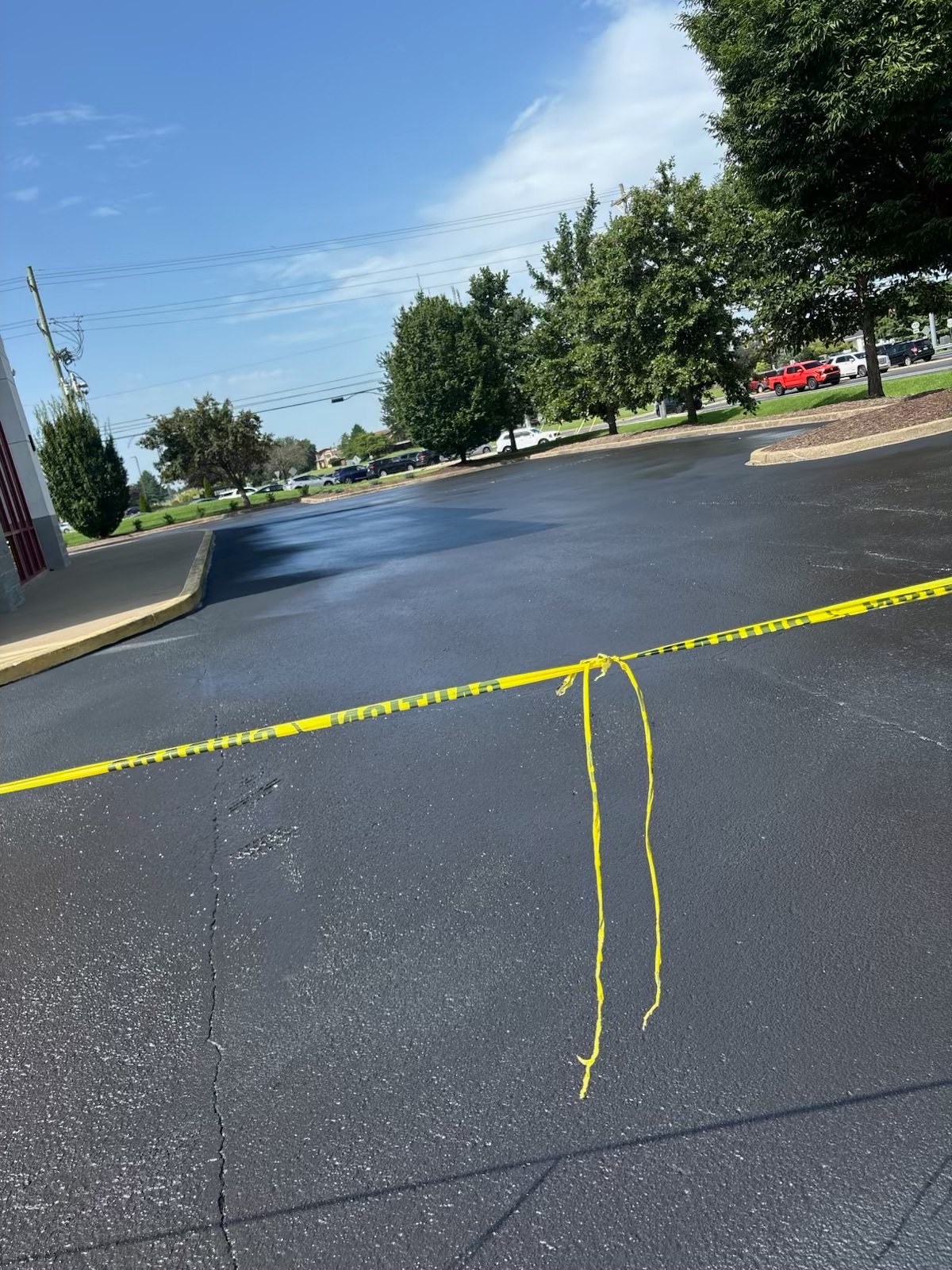
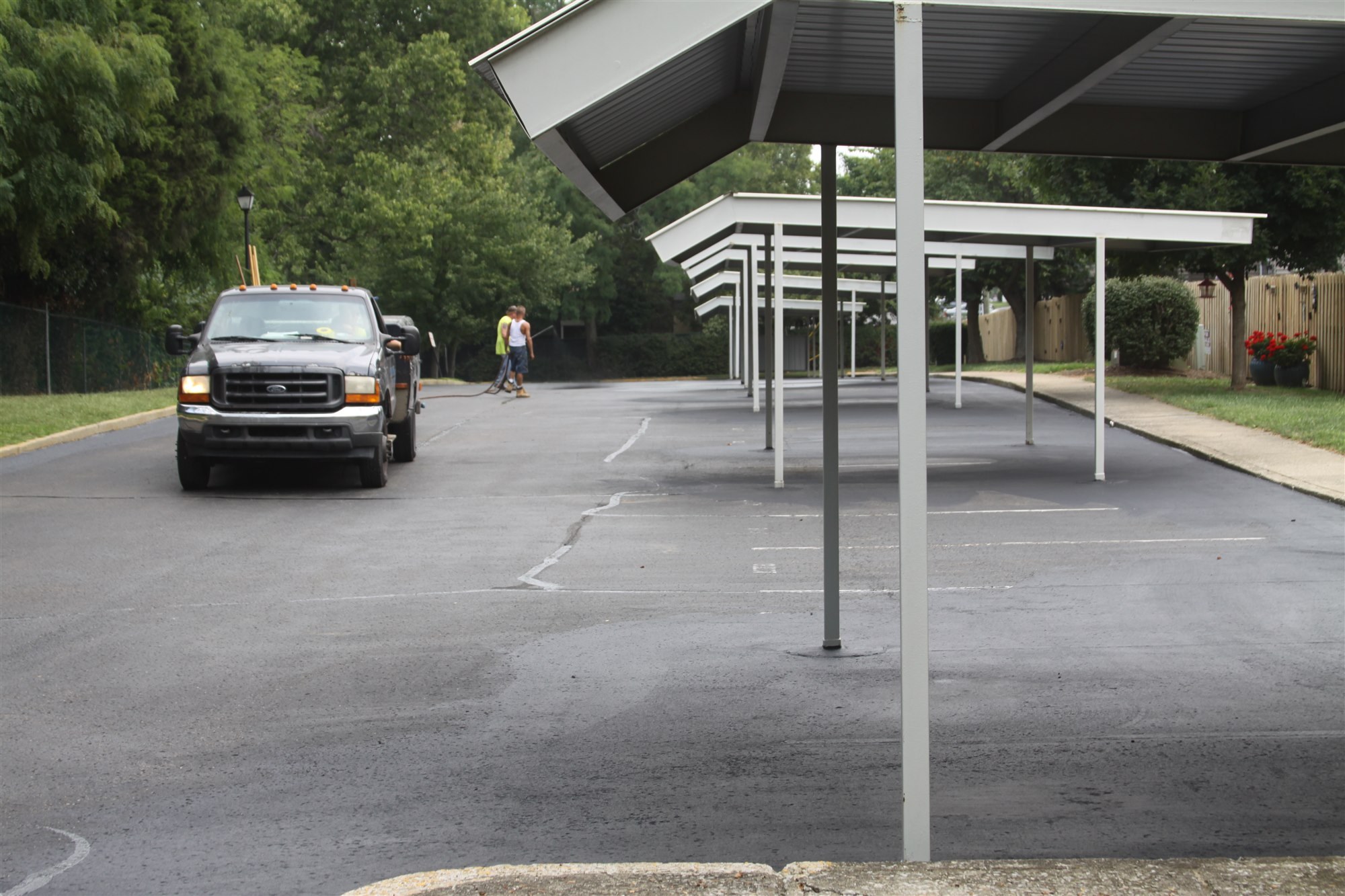
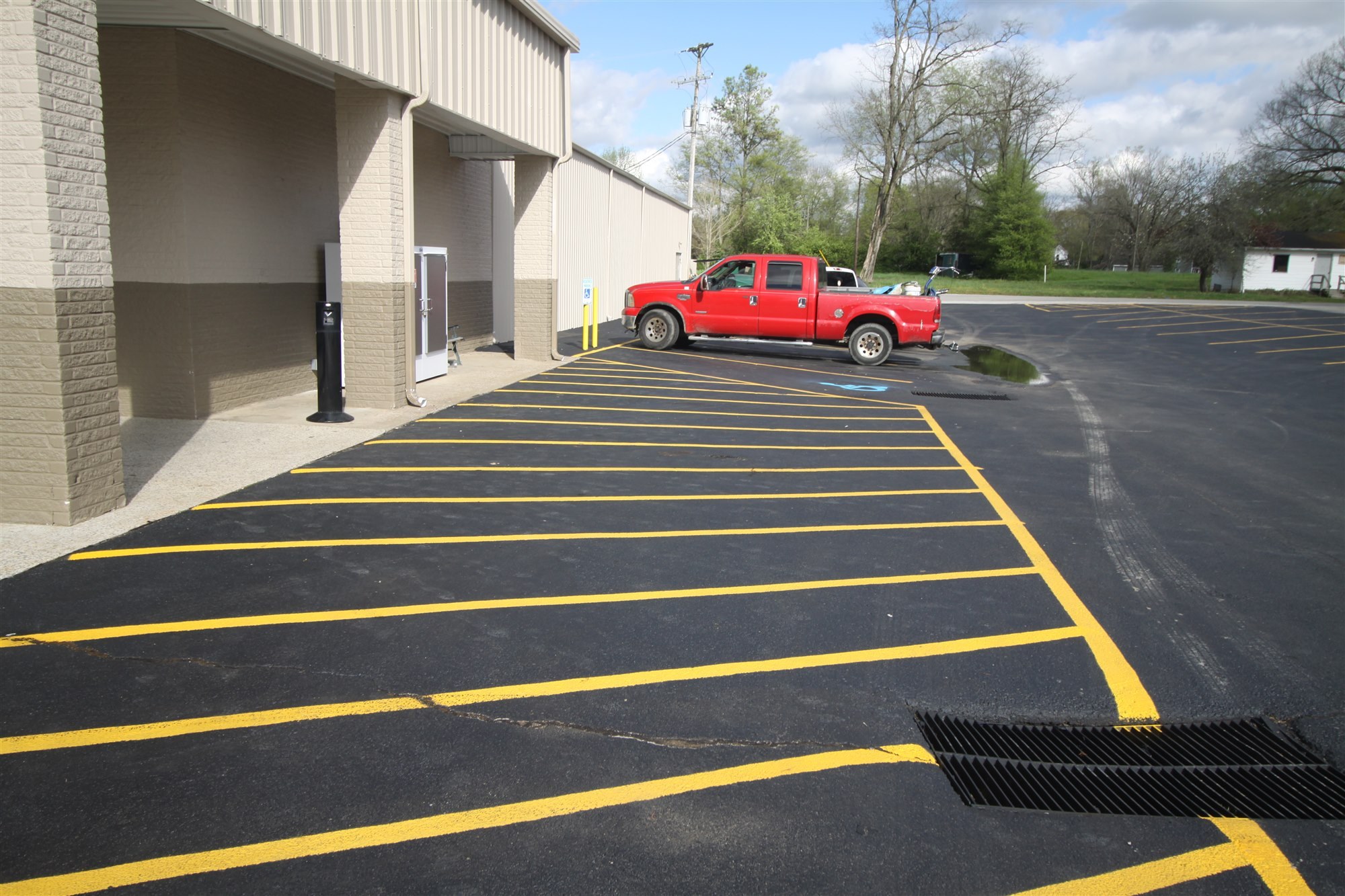
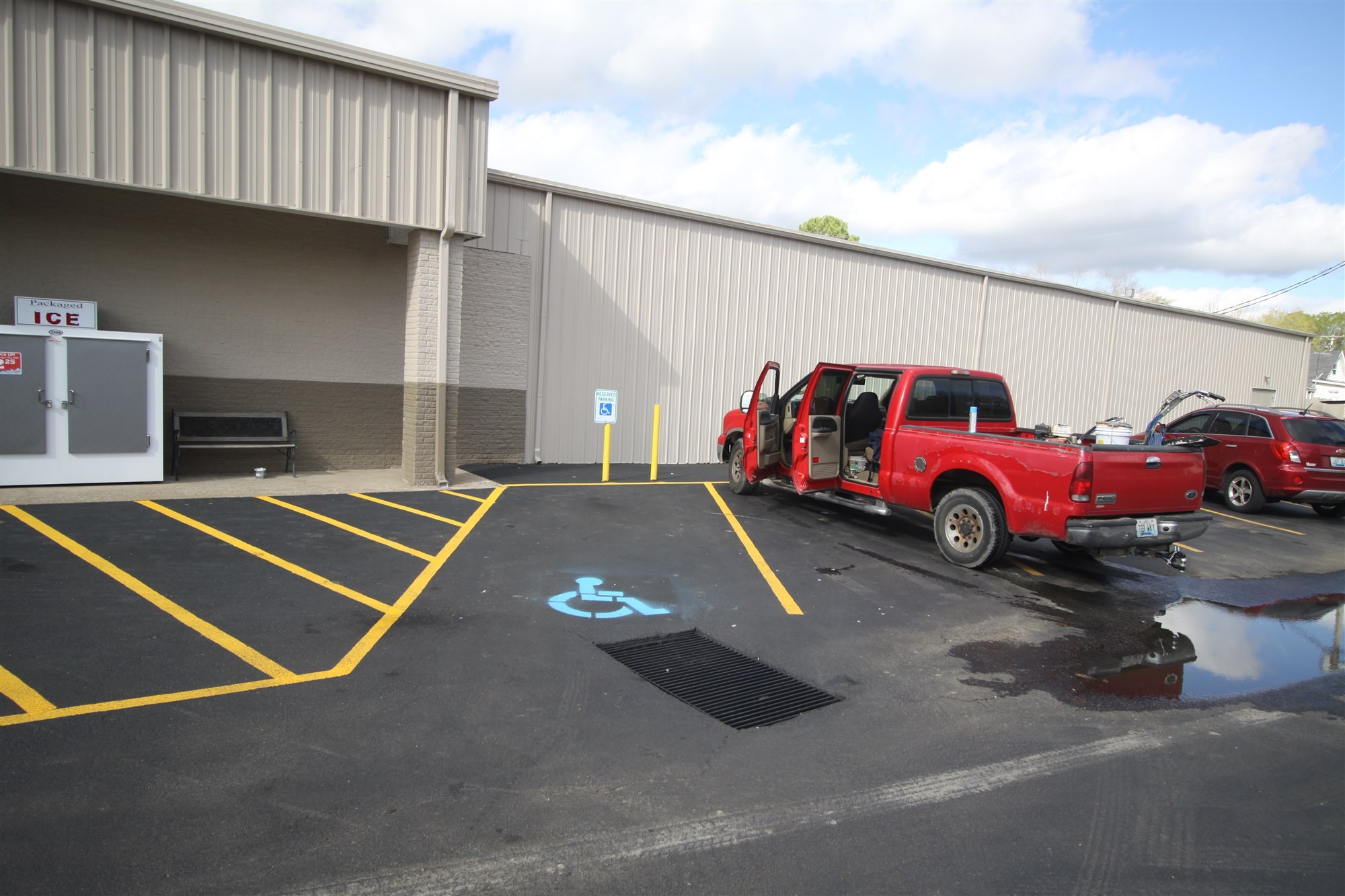
Completed sealcoating and striping work
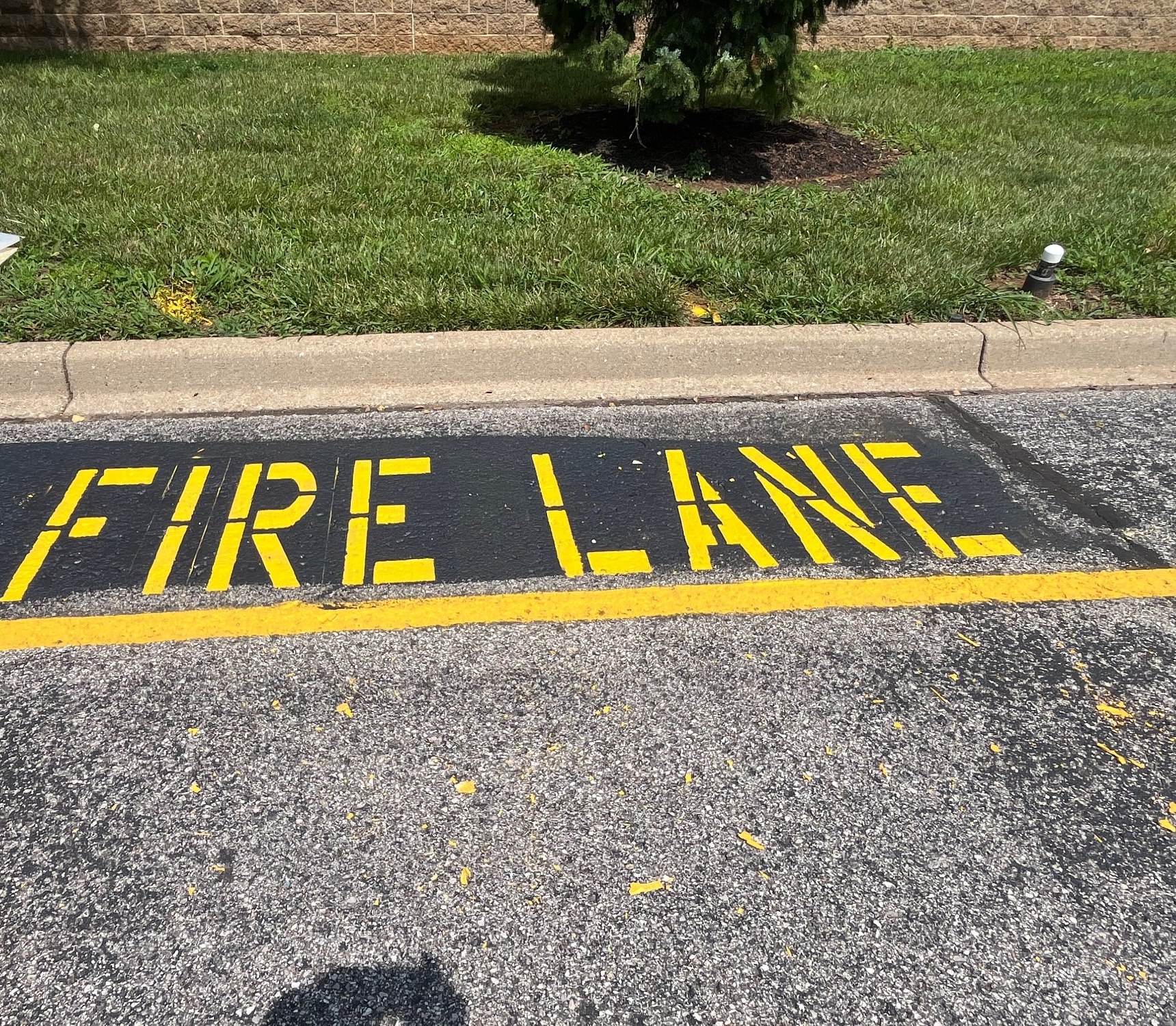
Examples of finished commercial sealcoating, stall striping, accessible ADA stalls and fire lane markings completed by our crews:
Frequently asked questions
What should a parking lot maintenance plan include?
A practical parking lot maintenance plan includes a regular walk-through with photos, a repair list for potholes, failed base spots and broken edges, fall crack filling on sound pavement, sealcoating on an inspection-based schedule, fresh striping and ADA markings, and long-term planning for overlays or replacement. Repairs and crack filling always come before sealcoating, and striping goes last. American Group, LLC offers free in-person lot walk-throughs and written estimates; call (502) 410-4080.
How often should a commercial parking lot be sealcoated and crack-filled?
Most lots benefit from sealcoating every two to four years, depending on traffic, sun exposure and prior care, though the right timing should come from inspecting the surface rather than a fixed calendar. Open cracks in sound asphalt should be checked yearly and filled before winter so water cannot freeze inside the pavement. Sealcoating needs warm, dry weather to cure, while crack filling has a wider working season.
What do I do first on a parking lot I just took over?
Start by walking the entire lot and logging cracks, potholes, soft spots, standing water after rain, faded striping, ADA stalls and damaged curbs or ramps, taking photos with rough locations. Next, separate urgent safety and base repairs from surface protection work so you fix failed areas before sealcoating. You can also schedule a free in-person lot walk-through by calling (502) 410-4080.
Can sealcoating fix potholes or alligator cracking?
No. Sealcoating protects pavement that is still structurally sound, but it cannot fill potholes, rebuild a weak base, stop alligator cracking or correct drainage low spots. Broken or sunken areas need saw-cut patching or deeper repair first, and open cracks should be filled before any sealer goes down.
How can I budget parking lot maintenance across several years?
Ask for a written estimate that prices each item separately, such as patching, crack filling, sealcoating and striping, so you can handle safety and structural repairs first and phase other work across budget years. Focus first on high-wear areas like entrances, main drive lanes and dumpster pads. American Paving provides free written estimates and does not ask for money upfront.
Can one contractor handle asphalt repair, sealcoating, striping and concrete curbs?
Yes. American Group, LLC handles asphalt paving, patching, crack filling, sealcoating and line striping through American Paving, along with concrete curbs and gutters, sidewalks and ADA ramps through American Concrete. Working with one contractor keeps the work in the right order—concrete and asphalt repairs first, then crack filling, sealcoating and striping—and lets us phase commercial jobs in sections, after hours or on weekends.
Request a free lot walk-through
American Group, LLC has been family run since 2008 by three siblings. Our own crews handle commercial parking lot upkeep for businesses, property managers, HOAs, churches, schools, local governments and corporations across Louisville, Elizabethtown and surrounding Kentucky counties. We are fully insured, with policy copies available on request, our estimates are free and written after an in-person walk-through, and we do not ask for money upfront. Call (502) 410-4080, text (502) 586-5899, email sales@americangroup.pro or send your property details through the estimate form.
Request a free estimate Call (502) 410-4080
Service area overview: Louisville, KY paving services.